
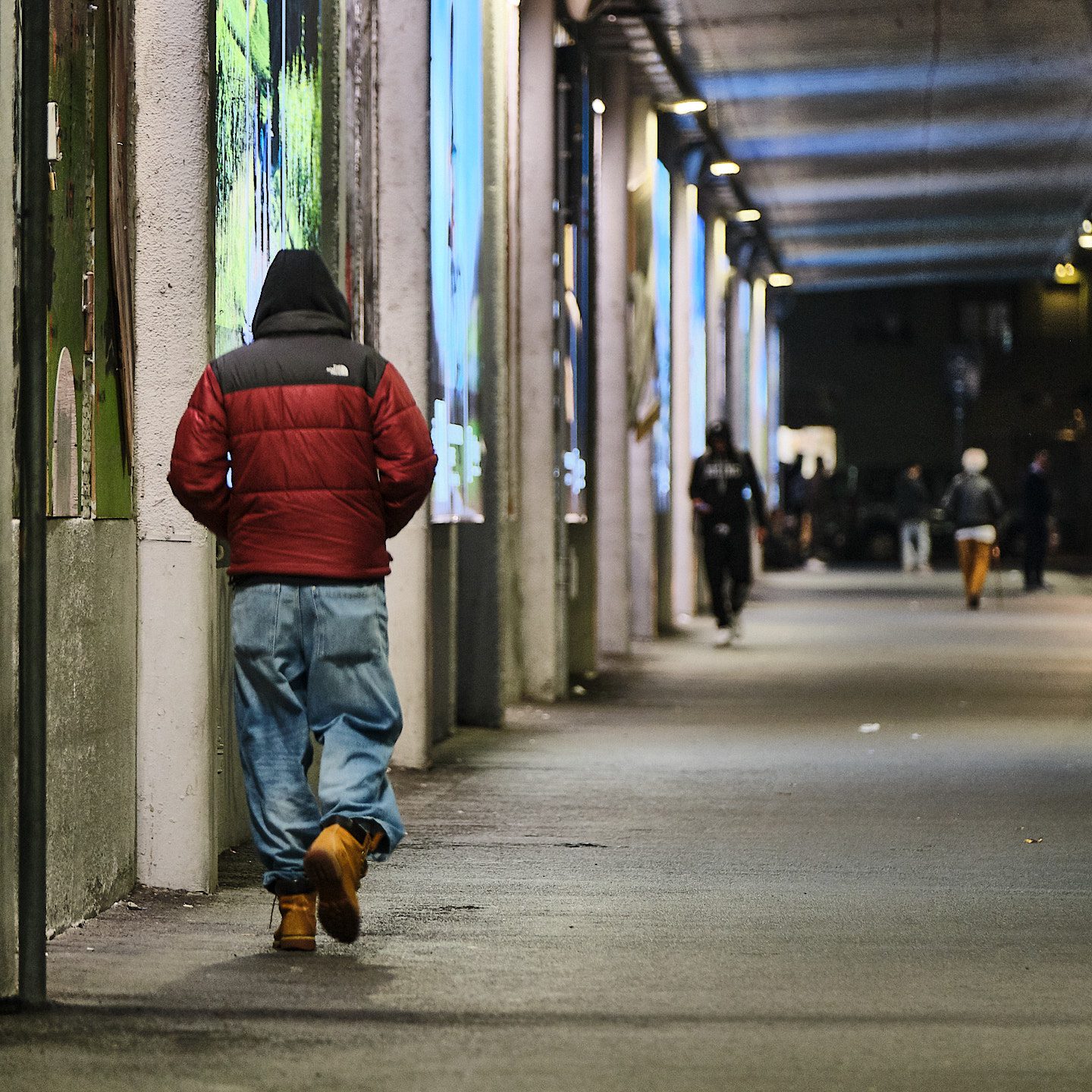
The paper explores marginality through a rhythmanalysis of the railway station in Bergamo (Italy). Three kinds of rhythm were identified in the station: the crescendo of urban and infrastructural development, the sinusoidal rhythms of commuters and travelers, and the rhythms of endurance of marginalized and homeless people. The conflicts and synchronizations between these three kinds of rhythm are examined. The analysis suggests that a rhythmical reading of the railway station’s social geographies can contribute meaningfully to understanding urban marginality, highlighting its temporal dimension and thus providing theoretical insights on temporal marginality. More precisely, the rhythmical lens sheds light on the politicization of time, and on how power is also maintained and enforced through rhythms and temporal structures.