
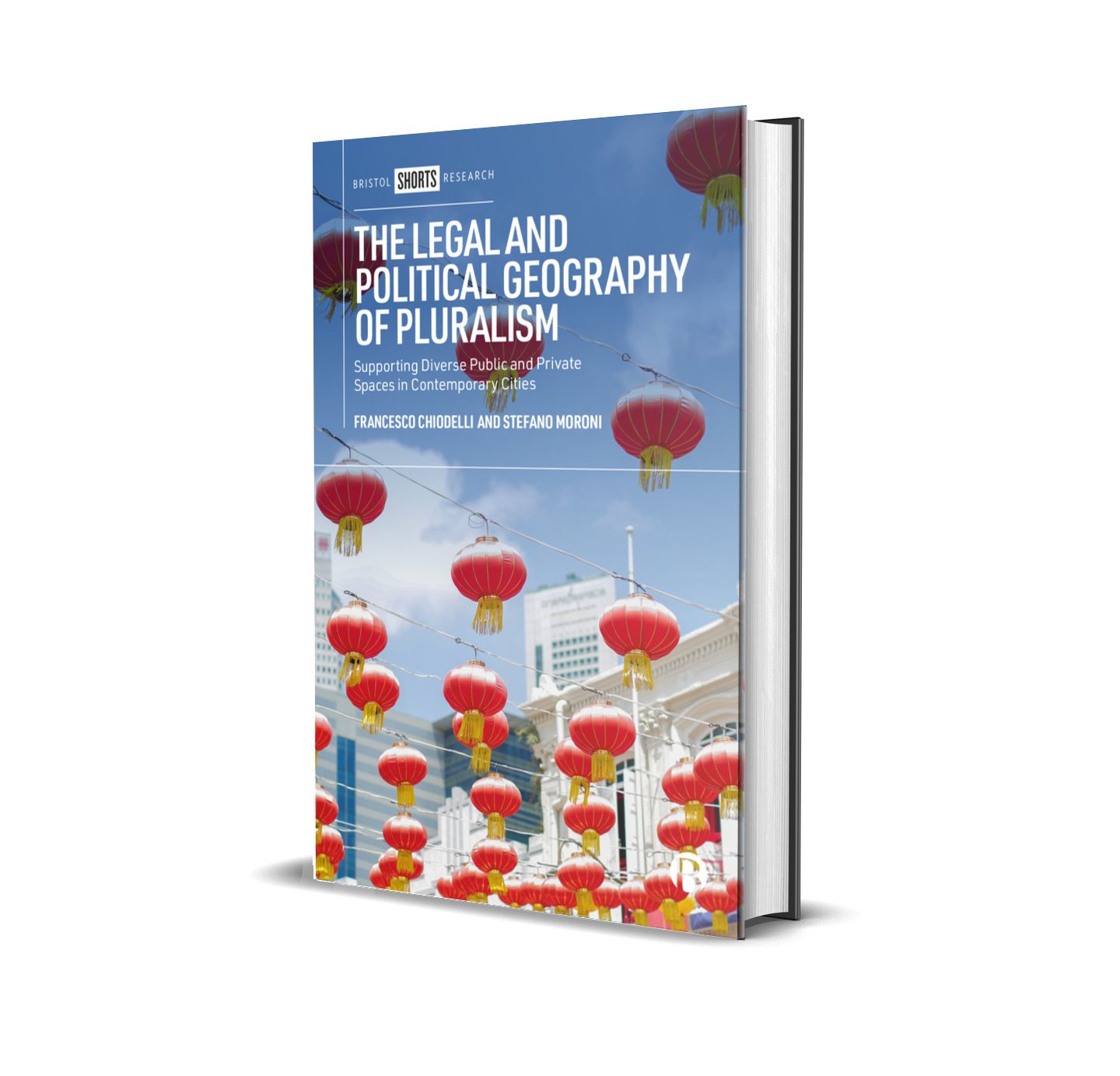
Pluralism – and the connected questions of toleration – is today a crucial theoretical and practical problem in need of critical discussion. Differently from what is usually done, such discussion must take urban space into serious consideration, not only because many of the issues of pluralism that we deal with daily are most forcefully manifest in cities, but also because the articulation of space has a close connection with the conflicts generated by diversity. Against this background, the book analyses the complex relation between pluralism (understood as the coexistence of many diverse conceptions of the good) and different types of public and private space (e.g. streets, parks, public squares, restaurants, shopping malls, homeowners associations), with a specific focus on the rules that govern such spaces. Accordingly, it deals with toleration as a matter of public ethics: that is, how and why the state should act in relation to particular problems. Indeed, the purpose of the book is to identify the limits within which acceptable public measures to spatially regulate diversity may lie. It does so by adopting a framework in which pluralism is seen as a pivotal value of contemporary democracies that must be protected and supported.
Table of contents
1. The Rules and Spaces of Diversity
2. The Structural Diversity of Public and Private Spaces
3. The Geography of Pluralism in Public Spaces
4. The Geography of Pluralism in Private Spaces
5. Pluralism, Urban Space and the Public Sphere
6. Urban Planning and the Pluralistic City
7. Conclusions: Spatial Spheres of Toleration